The Joy of Passing It On
Backstory
Some of the most useful things my dad ever taught me had grease on them.
I learned how to change the oil on my 1989 Dodge Daytona from Dad, along with spark plugs, tire changes, motorized headlight repair, and the sort of practical car knowledge that sticks with you because you had to use it. Before long, I bought the most expensive car stereo I could justify and installed it with the factory speakers.
Dad was not just teaching me how to swap parts. He was teaching me that systems could be understood, taken apart, improved, and put back together. Once you learn that lesson on one machine, it starts showing up everywhere else.
By the time I owned a 1999 Pontiac Sunfire, that mindset had already started to compound. I added power windows and locks with OEM door hardware, a power trunk release, aftermarket speakers that got loud and sounded great, and more. I'm a computer nerd, so of course I had a computer in the car. WinAmp ran on a mini PC disguised as a box of cassette tapes in the back floorboard, connected to a driver-facing dash-mounted 9-inch LCD that looked like it came right from the bridge of the Nebuchadnezzar.
Present Day
I'm a dad of two boys now, which changes the question. What do I pass on? Cars were one path into that lesson for me, but computers have been mine. Over the years I've written code in more languages than I can quickly count, and somewhere along the way I became the default fixer, builder, and general technology wrangler for our home. If I can pass some of that along to my kids, I hope what they really inherit is confidence: confidence around tools, around problems, and around the idea that they can learn how things work instead of being intimidated by them.
Which skills to pass on?
Teaching my 10-year-old son how to service a PC, rebuild it, and install an operating system feels like a direct continuation of what Dad gave me. It's a great skill to have, but the fun stuff has to come first if you want the interest to stick. So I'm starting with AI, of course.
I want my son to see it as a tool, not as magic. A remarkably useful tool, sure, but still one that needs to be understood well enough to be used with intention. The value is not in asking a machine to think for him. The value is in learning how to work with a powerful tool without surrendering his own judgment.
That matters because useful tools tend to compound. Learning to turn a wrench leads to understanding a car a little better. Learning to service a PC leads to understanding operating systems, components, troubleshooting, and how software sits on top of hardware. Learning to build with AI can lead to better questions, faster experiments, and more confidence turning an idea into something real.
And that is no longer theoretical in our house.
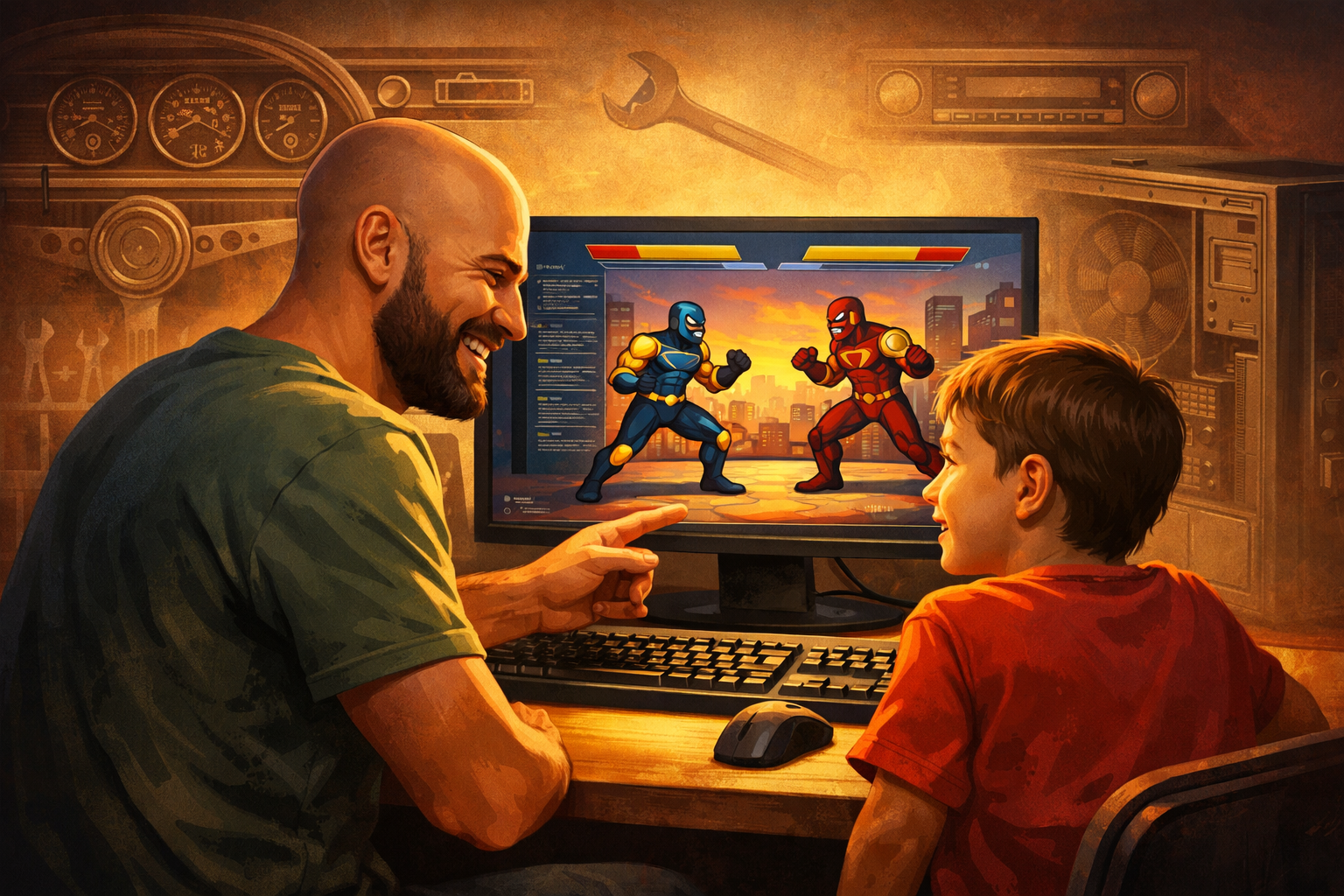
My eldest son and I just vibe coded a little browser-based superhero fighting game together. The first time we had two original fighters moving around the screen and trading hits, it was hard not to grin. On the surface, it is exactly the kind of thing that would have hijacked my imagination as a kid: two original fighters, a side-view arena, arcade-style controls, and the promise of a playable prototype that keeps getting better every time we touch it. Under the hood, though, what I really loved was the process.
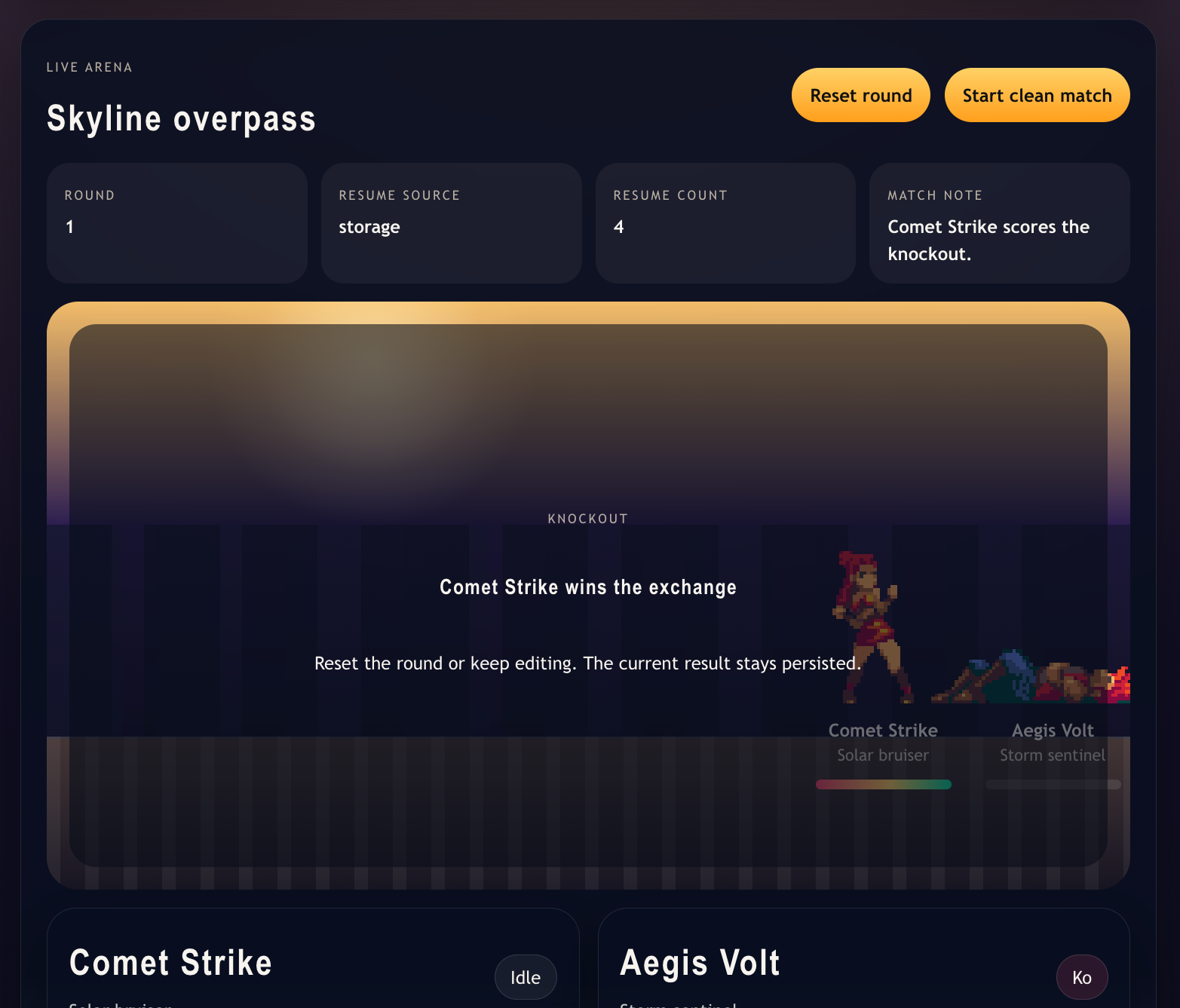
We were not just prompting for code and shrugging at whatever came back. We were thinking about what made the game ours. We were talking where to get some ready-made artwork for quick progress, about keeping the development loop fast and playable, and about what it means to keep building when the first draft is rough. Even in a small father-son side project, those decisions matter. They are part of learning how to build with both imagination and discipline.
That may be the most encouraging part of the whole AI moment for me. Used carelessly, these tools can absolutely flatten judgment and make people sloppy. Used well, they can pull a kid further into the act of making. They can shorten the distance between, "Wouldn't it be cool if..." and, "Hey Dad, it works."
That is the kind of lesson I want to pass on. Not just how to use a specific tool, but how to approach tools that might shape his future.
The older I get, the more I realize that the best things my dad passed to me were not specific repairs or upgrades. They were curiosity, confidence, and the instinct to learn by doing. If I can pass even a little of that along to my sons, whether the lesson starts with a screwdriver, an operating system install, or a half-finished fighting game we are building together, that will be a joy indeed.